
When global manufacturers invest in expanding production capacity, every supporting infrastructure project must be delivered with precision. Water supply is no exception.
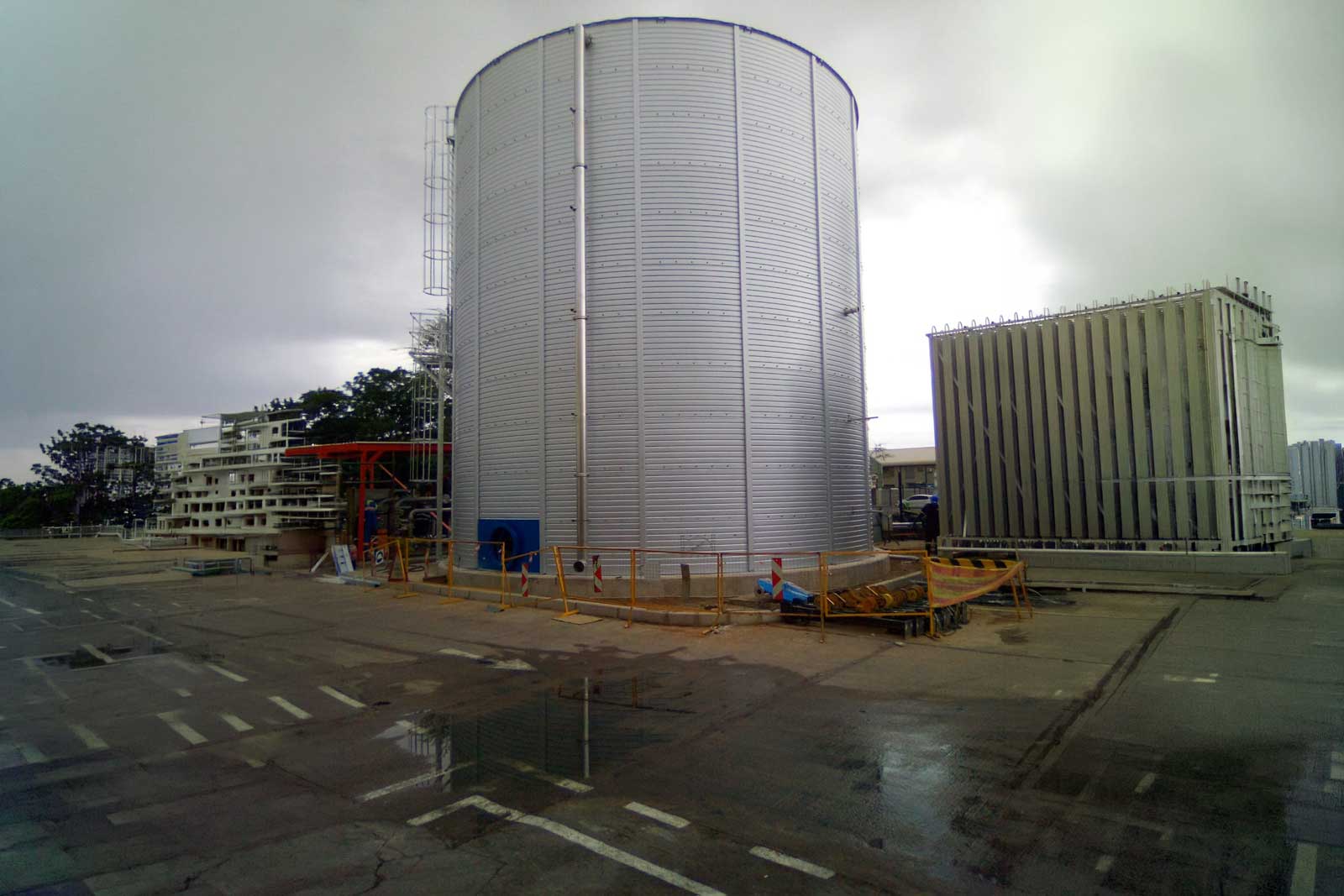
For Coca-Cola Botswana’s expansion of its bottling facility in Gaborone, securing an additional one megalitre of treated water storage was a critical requirement to support increased production capacity. While the completed tank now forms an important part of the site’s water infrastructure, the success of the project was driven by something much larger than the tank itself.
It was driven by structured project management.
From engineering co-ordination and manufacturing through international logistics, installation and commissioning, SBS Tanks managed the complete project lifecycle, providing Coca-Cola with a single point of accountability from concept through to practical completion.
The project called for the design, manufacture and installation of a custom engineered one megalitre water storage tank (ES16/11) to support Coca-Cola’s growing production facility in Gaborone, Botswana.
Unlike many standard water storage projects, the specification required several specialised features to meet Coca-Cola’s operational and quality requirements, including:
Because water is one of the primary ingredients used throughout Coca-Cola’s manufacturing process, maintaining product quality, hygiene and operational reliability was central to the project’s engineering requirements.
One of the biggest misconceptions in infrastructure projects is that manufacturing begins once an order is received.
In reality, successful projects begin with communication.
Following project award, SBS appointed a dedicated project manager who established regular weekly co-ordination meetings with Coca-Cola’s engineering team. These meetings became the central platform for reviewing progress, resolving technical queries and co-ordinating each stage of the project.
During this phase, the SBS engineering department worked closely with the client through multiple design revisions.
General Assembly (GA) drawings were continually refined as nozzle configurations, connection sizes, instrumentation requirements and overall tank arrangements evolved.
By Revision 5, every technical requirement had been fully co-ordinated and approved.
To assist the client’s engineering team, SBS also supplied detailed 3D engineering models, allowing Coca-Cola’s engineers to visualise the final installation and co-ordinate surrounding civil works well before manufacturing commenced.
Rather than simply supplying drawings for approval, SBS became an extension of the client’s engineering team.
One of the advantages of in-house manufacturing is the ability to sequence production around the client’s construction programme.
Rather than waiting for the complete tank to be manufactured before shipping, SBS identified an opportunity to accelerate the civil programme. The tank scour assemblies were manufactured first and dispatched approximately four weeks ahead of the main tank package.
This allowed Coca-Cola’s civil contractor to cast the scour pipework directly into the concrete foundation while the remaining tank components were still being manufactured in South Africa.
By overlapping manufacturing and civil construction activities, SBS helped reduce overall project duration and eliminated unnecessary programme delays.
It is a simple example of how proactive project management can shorten critical paths on infrastructure projects.
Once manufacturing commenced, production followed SBS Tanks’ ISO 9001 and ISO 45001 accredited management systems. Every stage of manufacturing was monitored through structured Quality Control Plans (QCPs), ensuring manufacturing remained controlled, repeatable and fully traceable.
Unlike projects that rely solely on final inspections, SBS applies quality controls throughout the manufacturing process.
Each completed project generates a comprehensive project databook containing:
The result is complete traceability for every major component supplied on the project.
For clients such as Coca-Cola, this documentation forms an important part of long-term asset management and future maintenance planning.
Once manufacturing was complete, SBS assumed responsibility for the entire export process.
The project was supplied on Delivered Duty Paid (DDP) Incoterms, meaning SBS managed every stage of the logistics journey until the equipment was safely delivered to Coca-Cola’s site in Botswana.
This included:
By managing the complete logistics chain, SBS removed a significant administrative burden from the client while reducing the risks associated with international freight and customs co-ordination.
Successful installation begins long before installers arrive on site. Prior to mobilisation, SBS prepared and submitted a comprehensive installation package to Coca-Cola’s safety and engineering teams.
This included:
The project manager also co-ordinated accommodation, travel and logistics for the installation team while managing the temporary export and subsequent re-import of specialist jacking equipment through the South African Revenue Service customs process.
Every detail was planned before the first installer crossed the border.
Once site access was granted, SBS employed its proven ground-up jacking methodology.
The installation sequence followed a carefully planned workflow:
Because the structure is assembled from the ground and progressively lifted, work can occur safely at low level while multiple installation activities happen simultaneously.
This methodology significantly reduced installation time.
The project was completed ahead of Coca-Cola’s desired programme, allowing earlier commissioning and reducing disruption to the overall expansion programme.
Following installation, the tank underwent commissioning and final testing before being handed over to the client.
The commissioning process included:
Following successful commissioning, SBS issued the project’s warranty documentation before completing final site housekeeping and demobilising the installation team.
The project was delivered safely, commissioned successfully and handed over ready to support Coca-Cola’s expanding bottling operations.
The Coca-Cola Botswana project demonstrates what modern infrastructure clients increasingly require from specialist suppliers. While the visible outcome is a one megalitre engineered water storage tank, the real value lies in everything that happened before the first panel was installed.
Engineering collaboration.
Programme management.
Documentation control.
Manufacturing quality.
International logistics.
Installation planning.
Safety compliance.
Commissioning.
These are the disciplines that reduce project risk, improve communication and help clients deliver infrastructure projects with confidence. For clients operating throughout Southern Africa and beyond, SBS Tanks provides far more than engineered water storage systems.
We provide the structured project management capability required to deliver them successfully.
© SBS Holdings 2026