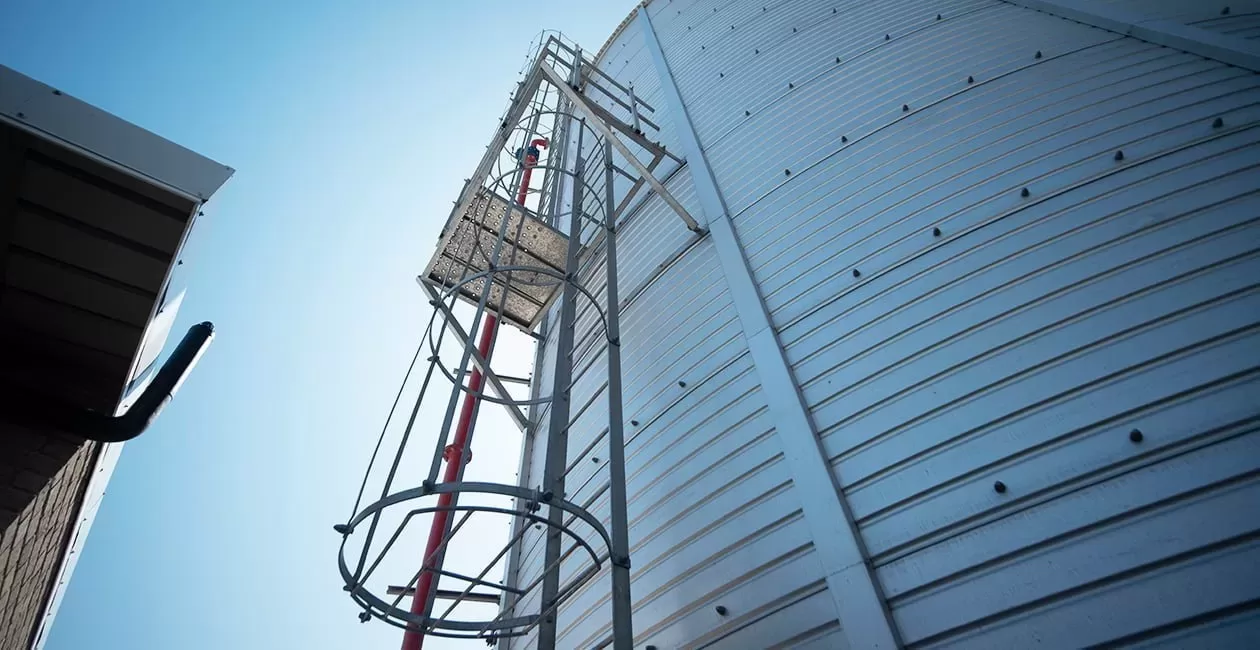

Work-at-height risk is not controlled only by adding more PPE once people are already working above ground. One of the most effective to reduce exposure is to examine the construction method itself and ask whether more of the work can be completed at a lower level.
Ground-up jacking is one such example. Instead of building the full tank shell progressively upward with workers following the structure, the tank is assembled in controlled stages and lifted so that successive rings can be added closer to ground level. The exact sequence depends on the tank design and installation method, but the underlying safety principle is clear: change the way the work is performed to reduce the duration and number of activities carried out at height.
This does not eliminate work-at-height or lifting risk. Jacking introduces its own critical controls, including stability, equipment condition, coordination and a disciplined lift sequence. The benefit comes from selecting an installation method that manages the overall risk profile rather than treating each hazard in isolation.
Safety planning often focuses on controls around a chosen construction method: harnesses, ladders, scaffolds, exclusion zones and supervision. These controls remain important, but the hierarchy of controls asks a more fundamental question first: can the work be designed or sequenced so that exposure is reduced before relying on personal protective measures?
For modular steel tanks, the erection sequence can influence working height, material handling, stability and the number of people exposed to particular tasks. A method that allows roof and upper shell activities to be completed closer to ground level can therefore change the risk profile of the project.
This is why installation methodology should be considered during project planning, not left entirely to the crew after mobilisation.
In a typical ground-up jacking sequence, the upper section of the tank is assembled first at a low working height. The roof structure and upper shell work can then be completed in the controlled sequence set out defined by the installation method.
Jacking equipment is installed and the assembled section is raised in a coordinated lift. A new shell ring is then added below it. The tank is lifted again and the process repeats until the required number of rings has been installed and the structure reaches its final configuration.
The exact equipment, jacking points, support arrangement and sequence are specific to the tank and its approved method. The lift must remain coordinated so that loads are controlled and the partially completed structure is not subjected to unintended distortion or instability.
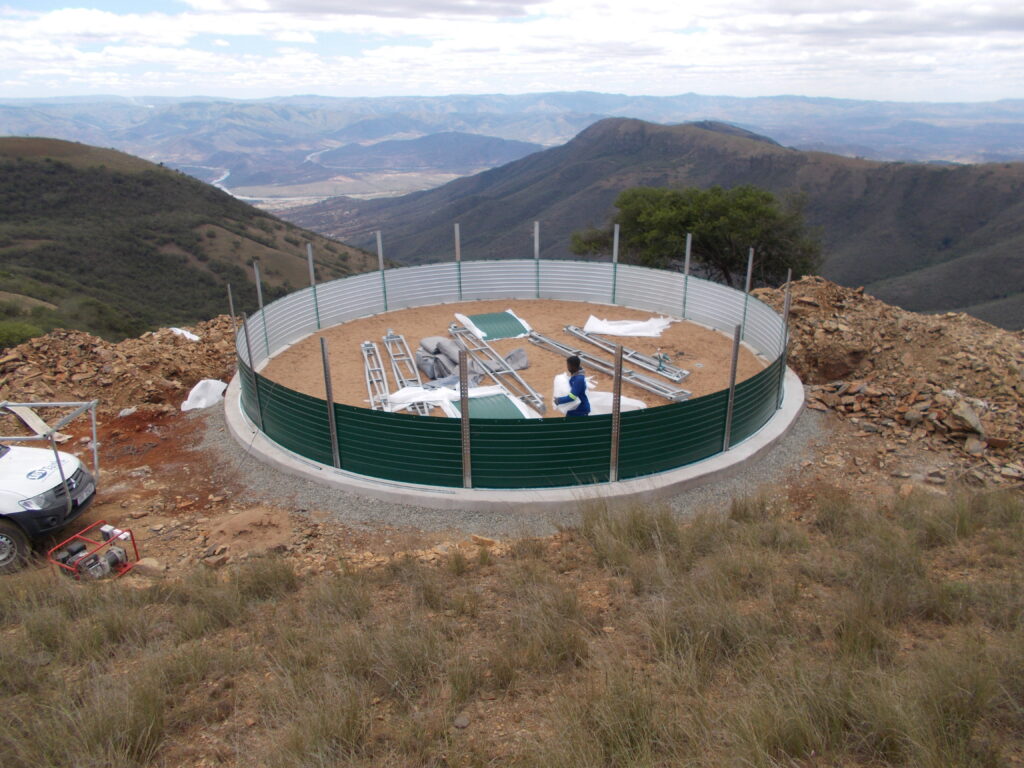
The main advantage is not that workers never leave the ground. It is that a greater proportion of repetitive assembly activity can take place at a lower and more accessible working level.
This can reduce the cumulative exposure associated with repeatedly transporting tools and components to increasing heights, moving around elevated work areas and completing numerous shell or roof activities from high access systems. It can also make supervision, communication and coordination easier because more of the active workface remains close to ground level.
However, residual work-at-height still needs proper access, fall-prevention or fall-arrest controls as required by the task and local rules. A safer methodology does not remove the obligation to control the risks that remain.
Reducing one risk does not mean the method is risk-free. Jacking involves stored energy, heavy structural loads, multiple lifting points and a partially completed structure. Equipment condition, correct placement, load distribution, communication and exclusion controls are therefore critical.
The lift should follow the approved sequence under competent supervision. Personnel should understand where they may safely stand, how instructions are communicated, which conditions require the lift to stop and how the structure is secured between stages.
Weather can also matter. Wind conditions that are acceptable for routine ground work may create additional concerns when large partially assembled structural surfaces are being lifted or are not yet in their final configuration. Site-specific planning must address those conditions rather than relying on a generic method alone.
Installation methods should be selected according to tank size, design, site constraints and the manufacturer’s approved procedures. Smaller tanks may be assembled using appropriate ladder or scaffold access where the risk assessment and method permit it, while larger tanks benefit from or require a jacking sequence.
Within SBS installation procedures, tanks of four rings and above are installed using jacks, while smaller tanks can use other approved access methods where appropriate. The purpose of this approach is consistency: the erection method is matched to the scale of the structure rather than being decided informally on site.
Project-specific conditions can still require additional controls. Constrained work areas, operating facilities, unusual foundations, severe weather exposure or complex interfaces may affect how the standard method is implemented.
Ground-up jacking depends on the team working as one coordinated system. A single operator acting independently can create uneven movement, unexpected load transfer or confusion. Clear roles, communication and supervision are therefore essential to the operation.
Competence is more than general construction experience. The team should understand the specific tank system, jacking equipment, sequence, stop conditions and inspection points. Supervisors need the authority to pause the operation if alignment, equipment condition, weather or any other factor falls outside the approved method.
This is also where toolbox talks and daily task planning add value. Before a lift, the team can confirm responsibilities, communication signals, exclusion areas, equipment status and the sequence ahead.
A common weakness in construction safety planning is a risk assessment that lists hazards separately from the actual work sequence. For jacking operations, the risk assessment and method statement should be reviewed together.
The method describes what happens first, next and last in the sequence. The risk assessment identifies what can go wrong at each stage and what controls are required. If the sequence changes, the risk profile may change too.
This alignment makes the documents operational. It also gives the safety officer a practical basis for observing the work: is the crew following the planned sequence, maintaining exclusion controls, using the correct equipment and stopping when conditions differ from the plan?
A safety inspection of a ground-up jacking operation should focus on whether the agreed controls are visible in the work. Useful observations include:
The objective is not to audit paperwork separately from the installation itself. It is to verify that the planned controls are working effectively in the real work environment.
SBS Tanks uses a ground-up jacking method for larger modular steel tanks as part of its controlled installation procedures. The sequence allows significant portions of the shell and roof assembly to be carried out at lower working levels before the structure is raised for the next ring.
The method is supported by project-specific risk assessment, method statements, competent installers, appropriate jacking equipment and supervision under the company’s ISO 45001 health and safety management system.
The safety benefit comes from the complete control system: choosing a method that reduces exposure, then controlling the additional risks introduced by the method.
Installation safety is influenced by how the structure is built, not only by the PPE used while building it. Ground-up jacking demonstrates how construction methodology can reduce cumulative work-at-height exposure by bringing more repetitive assembly activity closer to ground level where practicable.
That advantage must be balanced with rigorous control of jacking equipment, structural stability, communication, supervision and site conditions. No installation method removes the need for competent personnel and project-specific risk management.
For project teams, the broader lesson extends beyond tank installation: when planning hazardous work, examine the sequence itself. The safest control may be to change where and how the work is performed before adding controls around an unnecessarily risky method.
Contact SBS Tanks to discuss your project requirements and confirm the quality, inspection, documentation and installation approach appropriate for your project. [link to RFQ form]
SBS Tanks® is Africa’s leading manufacturer and supplier of modular steel panel water storage tanks fitted with internal liquid storage liners. With offices in Durban, Johannesburg and Cape Town, and ISO 9001 and ISO 45001 accreditation, SBS Tanks services clients across South Africa and the SADC region with engineered water storage tanks for municipal, mining, fire protection, commercial, industrial, agricultural and water conservation applications.
Contact one of our sales agents today or request a quote here.
It is an erection method in which upper tank sections are assembled at a lower working level, lifted in a controlled manner and successive shell rings are added below until the tank reaches its final height.
No. It can reduce the amount of repetitive work performed at height, but remaining elevated tasks still require appropriate access and fall-protection controls.
Key risks include heavy suspended or supported loads, stored energy, uneven lifting, structural instability, equipment failure, personnel entering exclusion areas and adverse site or weather conditions. These must be addressed in the approved method and risk assessment.
SBS installation procedures require jacking for tanks of four rings and above. Smaller tanks may use other approved access methods where appropriate to the design, site and risk assessment.
The method relies on coordinated lifting, correct equipment placement, clear communication and recognition of abnormal conditions. Product-specific training and competent supervision are therefore critical.
© SBS Holdings 2026