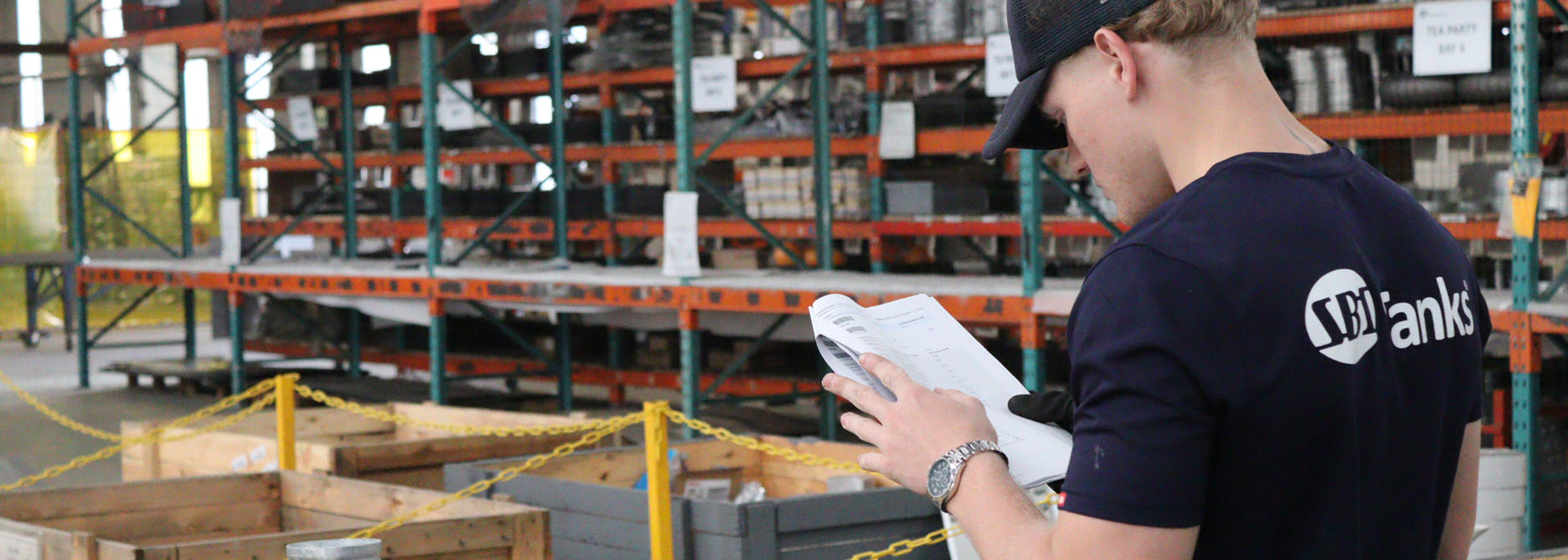

A modular steel water tank arrives on site as a coordinated set of components, but the quality story begins long before packing and delivery. Galvalume structural steel panels, high tensile grade fasteners, nozzles, multi-layer woven PVC bladder liners, and custom tank accessories must all be linked to approved information and processed through controlled manufacturing activities before the installation team can build the final asset.
For QC managers and project engineers, the important question is not whether every item has simply been ‘looked at’. It is whether the manufacturer can demonstrate a logical chain of control: approved material and design information, defined production requirements, appropriate inspections, identification of non-conforming outputs, and documented release before dispatch.
Traceability is the thread that connects those stages. Its purpose is not to create paperwork for every nut and bolt. Its purpose is to provide sufficient, project-appropriate evidence that the right materials and components were produced to the right requirements and that deviations were controlled before the product moved to the next stage.
Before material is processed, SBS Tanks ensures a controlled basis for production. Approved drawings, bills of material, component specifications, project requirements and current revisions establish what must be made and how conformity will be judged.
This is a critical first control because a perfectly manufactured component can still be wrong if it was produced from an obsolete drawing or an unapproved change. Document control therefore forms part of traceability: the project team should be able to establish which information governed the work at the time it was completed.
Changes also need to be controlled. When a nozzle location, fitting, tank configuration or project requirement changes, that revision must reach the relevant engineering, production, QC, packing and project teams before affected work continues.
Manufacturing quality begins with the inputs. Incoming materials should be checked against the applicable purchase, specification and project requirements before they are released into production. Depending on the material and project, verification can include supplier documentation, material certificates, identification, quantity, condition and other receiving checks.
The level of traceability should be proportionate to the risk and contractual requirement. Some items may require formal material certification or batch identification; others may be controlled through approved supplier information, receiving records and part identification. What matters is that the traceability method is defined rather than assumed.
If incoming material does not meet the requirement, it should not quietly enter the production stream. It needs to be identified and controlled so that the organisation can decide whether it should be rejected, returned, corrected, accepted under an authorised concession where appropriate, or otherwise resolved in accordance with the quality system.
Once released to production, components need to be manufactured from controlled drawings and specifications. Repeatability depends on defined processes, suitable equipment, competent operators and measurable inspection criteria rather than individual interpretation.
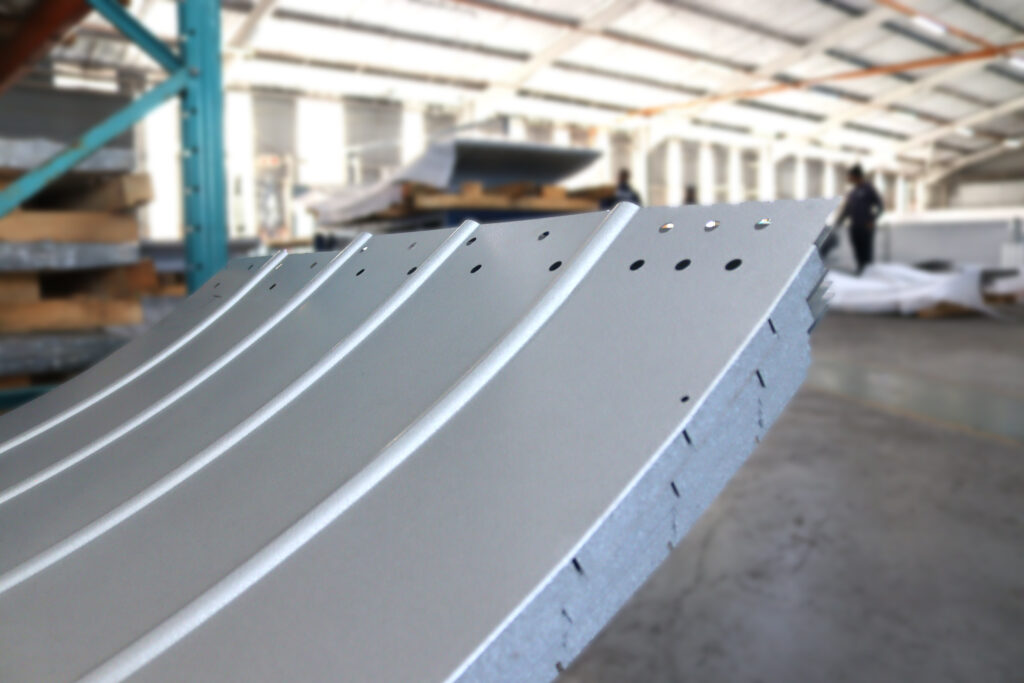
Dimensional control is particularly important in modular tank construction because individual parts must come together on site as one coordinated structure. Hole patterns, panel geometry, fittings and structural interfaces need to align with the approved design. Variation that appears small at component level can become a larger installation problem when repeated across many parts.
QC therefore focuses on the characteristics that are critical to fit, function and compliance. The exact checks vary by component, but the underlying principle is consistent: measure or verify against a defined requirement, record results where required, and prevent non-conforming output from being unintentionally released.
Traceability is often misunderstood as a single serial number attached to a finished product. In practice, it is a system of linked information. For a manufactured tank project, records may connect project numbers, approved drawings, material documents, production information, inspection results, component identification, packing information and release status.
The exact depth of traceability depends on the component, specification and contract. Project teams should therefore avoid both extremes: assuming that no records exist because individual items are not serialised, or assuming that every microscopic input can automatically be traced to source without confirming the agreed requirement.
A useful traceability system should allow the manufacturer and client to answer practical questions. Which project was this component made for? Which revision governed its manufacture? Was the required inspection completed? If a deviation occurred, how was it resolved? Has the component been released for the next stage?
Finding a non-conformance is not evidence that a quality system has failed. Failing to control it is. Manufacturing processes involve people, materials and equipment, so an effective QMS must be able to identify departures from specification and prevent them from moving forward unnoticed.
A controlled non-conformance process typically includes identification of the affected item, segregation or other means of preventing unintended use, evaluation of the issue, an authorised disposition, corrective action where required, and re-inspection or verification before closure.
Where the issue points to a broader process weakness, root-cause analysis and corrective action can prevent recurrence. This is one of the reasons repeatable factory manufacturing is valuable: patterns can be measured and improved systematically rather than each site resolving similar problems independently.
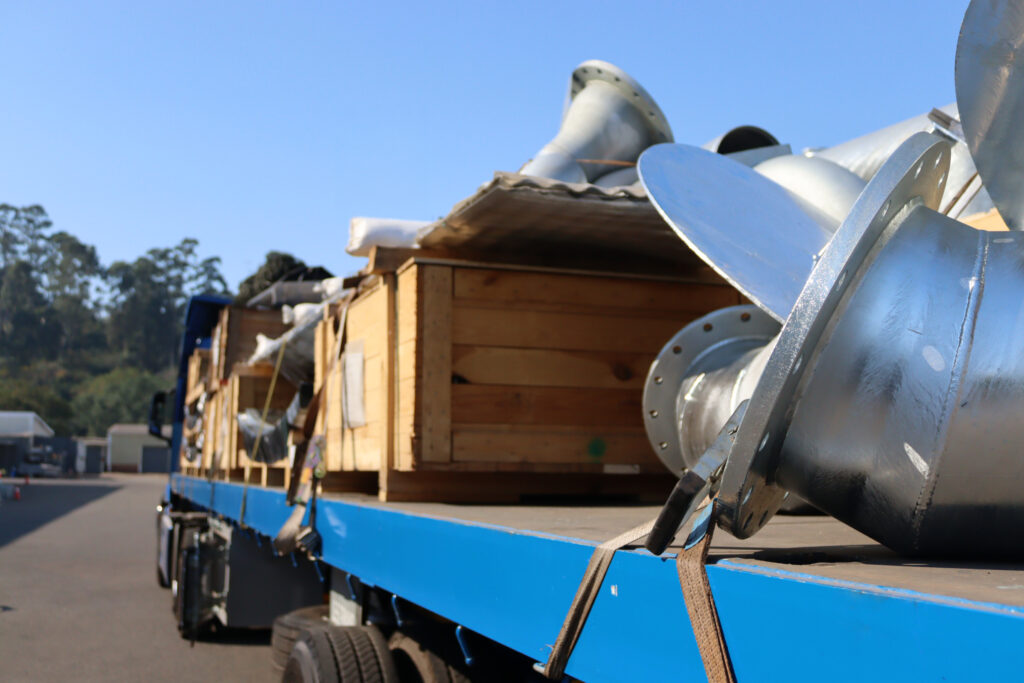
A component is not ready for site merely because its manufacturing operation is complete. The required QC checks and release status must also be complete, and packing must preserve identification and protect components during handling and transport.
For modular tanks, disciplined packing and inventory control support installation quality. The site team needs the correct components in a logical, identifiable form. Missing, damaged or mixed items can create delays and encourage unplanned site modifications, so logistics and QC are more closely linked than they may first appear.
Before dispatch, project-specific requirements may also call for documentation review, client or consultant inspection, witness points, photographs, release notes or other evidence. These should be agreed early so that the factory programme can accommodate them.
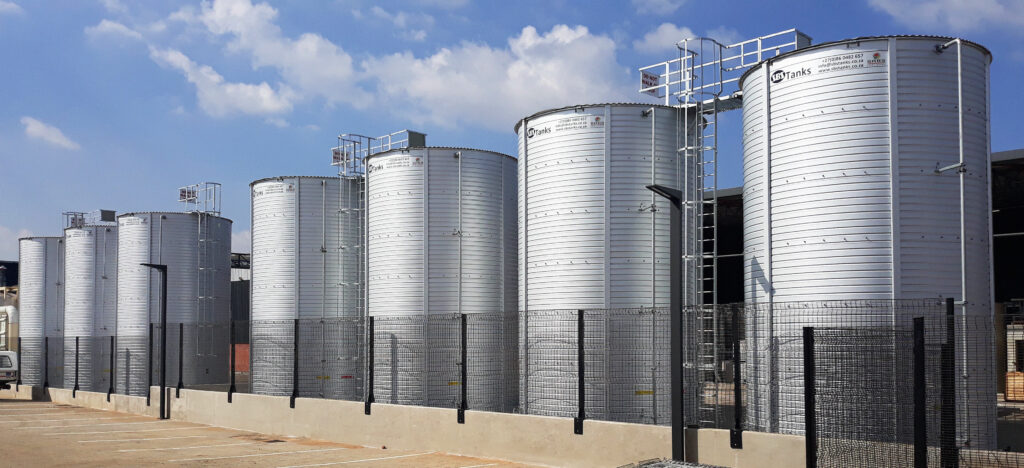
The value of controlled manufacturing becomes especially visible when a project includes several tanks or when the same storage approach is deployed across multiple sites. The client is not buying one isolated outcome; it is relying on consistent execution across repeated assets.
Factory-controlled processes help reduce variability by using controlled drawings, controlled production methods, inspection criteria and documented corrective action. Lessons from one production batch can be fed back into the process rather than remaining isolated at a single site.
For mines, utilities, industrial groups and other owners with repeated infrastructure, this supports more predictable installation, documentation and asset management.
SBS Tanks manufactures modular steel tank components in a controlled factory environment under its ISO 9001 quality management system. Project information, material requirements, production activities, inspection records and release controls are managed through defined processes before components are packed for site.
Where project requirements call for specific certificates, inspections, witness activities or data-book records, these can be incorporated into the project quality plan. The objective is to give the installation team verified components and to give the client an auditable quality trail appropriate to the project.
That is what ‘from steel to site’ should mean in practice: not only moving material through a factory, but controlling the information and evidence that travels with it.
Manufacturing traceability is valuable because it turns quality from an assertion into evidence. Approved information establishes what must be produced. Incoming checks control the inputs. Production and dimensional inspection verify the work. Non-conformance processes prevent known deviations from being released. Packing, documentation and final release protect the quality chain through to site.
For project teams, the key is to define the required level of traceability before manufacture begins. Not every component needs the same record depth, but critical materials, inspections and project requirements should be identifiable and auditable in a way that matches the risk and specification.
The stronger the quality chain, the less the site team has to discover, reinterpret or correct during installation.
Contact SBS Tanks to discuss your project requirements and confirm the quality, inspection, documentation and installation approach appropriate to your project.
SBS Tanks® is Africa’s leading manufacturer and supplier of modular steel panel water storage tanks fitted with internal liquid storage liners. With offices in Durban, Johannesburg and Cape Town, and ISO 9001 and ISO 45001 accreditation, SBS Tanks services clients across South Africa and the SADC region with engineered water storage tanks for municipal, mining, fire protection, commercial, industrial, agricultural and water conservation applications.
Water tank traceability provides a clear quality trail from the first material received at the factory through manufacturing, inspection, packing and delivery to site. It connects approved project information, material verification, controlled production, dimensional checks, non-conformance management and final release.
For modular steel water tanks, traceability helps ensure that components are manufactured to the correct drawings and specifications, inspected against defined requirements and controlled if deviations occur. It also supports more predictable installation by ensuring the correct, verified components reach site.
The article explains why effective traceability is about more than serial numbers or paperwork. It is about creating auditable evidence that the right materials and components were produced to the right requirements and released through a controlled process.
For project engineers, QC managers and asset owners, understanding this quality chain provides greater confidence in manufacturing consistency, documentation and site readiness.
Traceability should be defined according to the component and project requirement. Records can link project information, materials, manufactured parts, inspections and release status, but not every small item necessarily carries an individual serial number.
Checks can include identification, quantity, condition, supplier documentation, material certificates and conformity to purchase or project requirements. The exact receiving checks depend on the material and specification.
The item should be identified and controlled to prevent unintended use. It is then evaluated and resolved through an authorised disposition, with correction or replacement and re-inspection where required, via our corrective action process.
Modular components must align during assembly. Repeated dimensional variation can affect fit-up, interfaces and installation efficiency, so critical dimensions need to be controlled against approved drawings and criteria.
A data book is a compiled set of project quality and technical records. Contents vary by contract and may include approved drawings, certificates, inspection records, release information and other project-specific documentation.
© SBS Holdings 2026