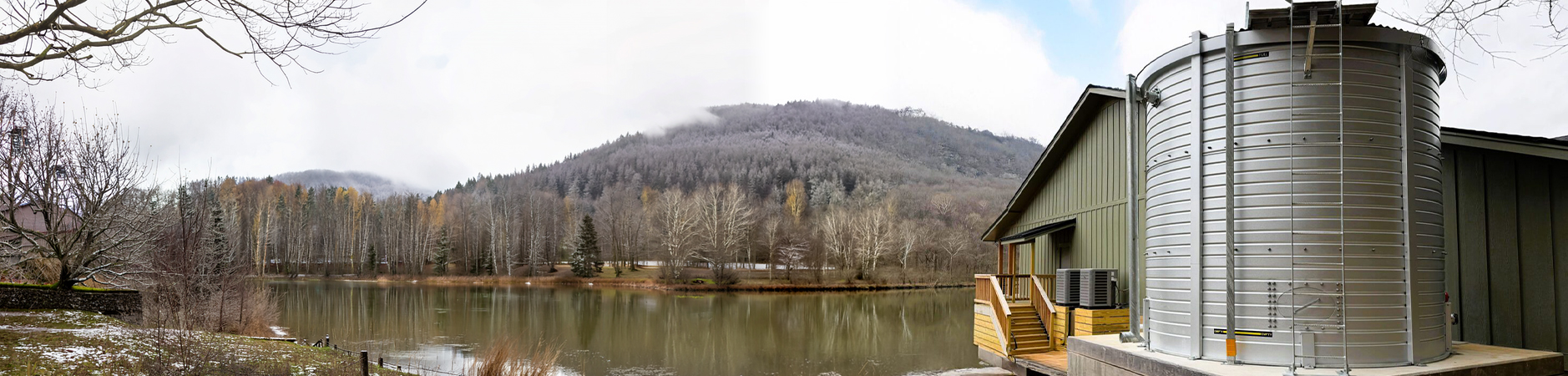

PROJECT SNAPSHOT:
Location: Chattanooga, Tennessee | Application: NFPA 22 fire protection water storage | Tank: CY05/03 | Capacity: 29kl
When engineers think about seismic design, it is easy to picture buildings shaking during an earthquake. Water storage tanks behave differently.
Unlike a conventional structure, a tank contains a large liquid mass that can move independently of the steel shell. During an earthquake, the ground, foundation and tank structure accelerate, while the stored water develops its own dynamic response. The result is a combination of impulsive loading, convective wave action, sloshing forces and overturning demand.
As explained in the earlier Engineering Month article, Seismic Design for Water Storage Tanks: Understanding Dynamic Loading in Critical Infrastructure, the engineering objective is not to eliminate all movement. It is to ensure that the tank remains structurally stable, retains its contents and continues functioning after the event.
These principles became central to the design of a fire protection water tank supplied by SBS Tanks for a scenic function venue in Chattanooga, Tennessee.
The project required a 29kl CY05/03 tank to provide a dedicated NFPA 22-compliant water reserve for the venue’s sprinkler system.
Although the tank was relatively compact, its function increased the importance of the seismic assessment. A fire protection tank cannot merely avoid collapse. If an earthquake damages nearby buildings, electrical systems or other services and a fire follows, the tank must still be capable of supplying the required reserve volume to the fire suppression system.
This operational requirement influenced the project’s ‘Importance Class’ and increased the level of structural assurance required. The tank had to remain upright, retain its water and preserve the functionality of its fire protection connections after the designed seismic event.
One of the first engineering considerations was not the steel structure itself, but the behaviour of the water inside it.
During seismic activity, the stored water moves from side to side and develops a predicted convective wave height. This sloshing action can place additional stress on the upper shell panels and roof sheets. At the same time, the shifting liquid mass changes the position of the tank’s centre of gravity and increases the overturning moment acting on the structure.
A useful comparison is carrying an open bucket of water and stopping suddenly. The bucket stops with you, but the water continues moving. Inside a 7,640-gallon tank, that same principle creates significant dynamic forces that must be transferred through the tank shell, hold-down system and concrete foundation.
The engineering team therefore assessed not only the static weight of the stored water, but also the additional shear, uplift and overturning forces created as the water moved back and forth during a seismic event.
Seismic design is not determined by location alone. For the Chattanooga project, SBS engineers considered the site’s expected peak ground acceleration, soil classification, tank geometry, required working volume and infrastructure importance.
Peak ground acceleration provides an indication of the intensity of ground movement expected at the site. Soil conditions influence how that movement is transferred into the tank and foundation. Hard rock can transmit sharp accelerations, while softer soils may amplify movement or introduce settlement-related concerns.
Tank proportions also affect structural behaviour. Taller tanks generally create a greater overturning lever arm, while shorter, wider configurations can reduce overturning demand. The required working volume, predicted wave height and necessary freeboard must therefore be considered together when selecting the final tank configuration.
The seismic analysis identified the anchoring system as the principal area requiring modification.
The number of anchor points was increased, and seismic-rated chemical anchors were specified to provide the required resistance to the additional shear and uplift forces. The engineering team also assessed anchor spacing, edge distances and potential failure modes within the concrete foundation. Adding anchors without considering these relationships can concentrate loads and increase the risk of localised concrete failure.
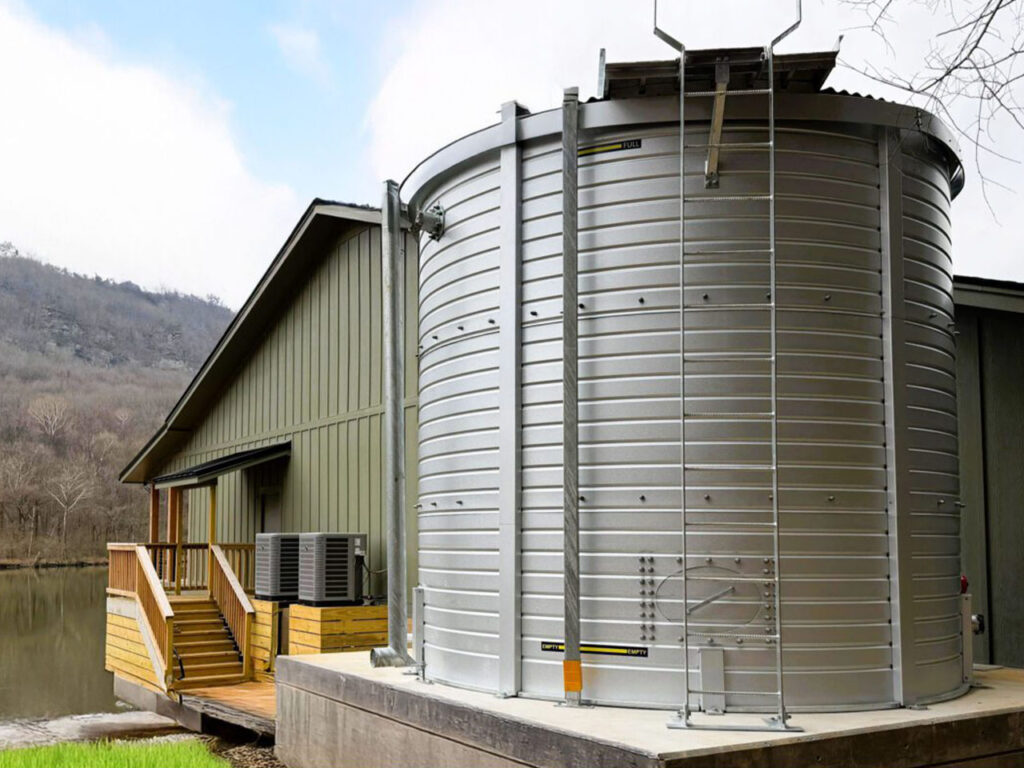
Accommodating the revised hold-down arrangement required changes to the lower hoop configuration and several lower tank components, including the panels associated with the sidewall access hatch. These modifications allowed the additional anchors to be positioned correctly without compromising access, component interfaces or the structural load path.
The existing concrete foundation concept remained suitable, but its compatibility with the revised anchor layout still had to be verified. On other seismic projects, changes to anchor quantity, spacing or edge distance can require corresponding foundation modifications.
The final design brought together requirements from several recognised standards.
A bespoke calculator developed by leading seismic research professors was developed for an SBS Tank to assess allowable stresses and the structural capacity of the tank materials
• ASCE 7 provided the seismic loading framework and site-specific earthquake design inputs.
• SANS 10160 was used for the wind actions applicable to the tank’s cyclonic structural configuration.
• NFPA 22 governed the fire protection storage application and associated system requirements.
Once the calculations and General Arrangement drawings were complete, the engineering submittal package was reviewed by a Tennessee state-licensed Professional Engineer. The local engineer could question, request changes or approve the design before sealing the final submission, providing independent verification that the project satisfied the applicable state and local requirements.
The tank was manufactured through SBS Tanks’ ISO 9001-certified quality system and delivered to site as a modular steel panel system. The contractor completed the concrete foundation in consultation with SBS Tanks before the installation team mobilised.
Once the foundation and anchor requirements had been confirmed, a three-person installation crew assembled and commissioned the tank in two days. The compact programme reduced disruption to the venue’s development schedule while ensuring that the fire protection infrastructure was installed in accordance with the approved engineering design.
The finished tank combined NFPA 22 fire protection functionality, a durable internal liner, corrosion-resistant steel construction and the project-specific seismic hold-down arrangement, while remaining visually compatible with the venue’s scenic setting.
The Chattanooga project demonstrates that seismic engineering is not simply about designing a stronger water tank. It is about understanding how the tank, stored water, anchoring system and foundation behave together as a single dynamic system.
By evaluating convective wave behaviour, overturning moments, soil conditions, infrastructure importance and project-specific seismic loading, SBS Tanks delivered a fire protection system engineered not only to withstand an earthquake, but to remain ready for the emergency that could follow.
As SBS completed more seismic tank modifications and projects across different regions, the Engineering Department recognised the need for a faster and more consistent method of completing preliminary seismic assessments. These calculations require numerous project-specific inputs and can involve several design iterations before a compliant and commercially practical tank configuration is identified. To improve engineering response times and support quicker customer quotation turnaround, SBS invested approximately a year in developing an in-house seismic calculation tool.
The calculator allows engineers to assess proposed tanks against a selection of recognised international seismic standards. Inputs can include project location, peak ground acceleration, soil classification, Importance Class, working volume and tank geometry. The tool supports the evaluation of dynamic liquid behaviour, predicted wave height, overturning demand and anchoring requirements, while identifying where structural modifications may be necessary.
Rather than replacing engineering judgement, the calculator provides a structured starting point for comparing tank configurations, testing the viability of proposed modifications and identifying more practical proportions early in the project. It can also be adapted to different regional standards, helping the engineering team respond to international seismic enquiries with greater consistency and speed. All final outputs remain subject to detailed engineering review and, where required, verification by a locally registered Professional Engineer.
This accumulated capability enables SBS Tanks to support clients earlier in the design process, when tank geometry, foundations and anchoring strategies can still be optimised.
“The most significant structural load during an earthquake may not be the steel itself, but the movement of the water inside it.”
Every seismic project presents a different combination of site conditions, operational requirements and local design standards. Speak to one of our consultants today to discuss the location, required capacity, Importance Class and engineering considerations for your project. The SBS Tanks engineering team can support early-stage seismic assessment, tank selection, anchoring strategy and project-specific design development. [link to RFQ form]
SBS Tanks USA supplies modular steel panel water storage tanks for commercial, industrial, agricultural and fire protection applications. The tanks are engineered for project-specific environmental and operational requirements, rapid on-site installation and compliance with recognised standards including NFPA 22. Through in-house engineering, quality-controlled manufacturing and collaboration with locally licensed Professional Engineers where required, SBS Tanks supports dependable water storage infrastructure across the United States.
Why do fire protection tanks require seismic design?
Fire protection tanks are critical infrastructure. They must remain structurally sound, retain the required reserve volume and remain capable of supplying the fire suppression system after a seismic event.
What is liquid sloshing?
Liquid sloshing is the movement of stored water inside a tank during an earthquake. It generates convective wave forces and increases shell stress, uplift, shear and overturning demand.
Why were additional anchors required on the Chattanooga tank?
The calculated seismic loading increased the forces transferred into the hold-down system. Additional seismic-rated chemical anchors improved resistance to the resulting shear and uplift forces.
Does every seismic tank require the same modifications?
No. The final design depends on peak ground acceleration, soil classification, tank geometry, working volume, Importance Class, applicable standards and foundation conditions.
What standards were considered for the Chattanooga project?
The project incorporated ASCE 7 for seismic loading, SANS 10160 for wind actions and NFPA 22 for the fire protection application. The final package was reviewed and sealed by a Tennessee state-licensed Professional Engineer.
Can modular steel tanks be engineered for seismic regions?
Yes. Through project-specific analysis and appropriate modifications to anchoring, structural detailing and, where necessary, foundations, modular steel tanks can be designed for seismic applications.
Designing a fire protection water tank for earthquake loading involves far more than increasing the strength of the steel structure. Engineers must understand how the stored water behaves during seismic activity, how the tank interacts with its foundation and how dynamic forces influence anchoring and structural stability. This Chattanooga project demonstrates how SBS Tanks engineered an NFPA 22-compliant fire protection tank through project-specific seismic analysis, enhanced anchoring, revised component detailing and independent Professional Engineer verification.
© SBS Holdings 2026