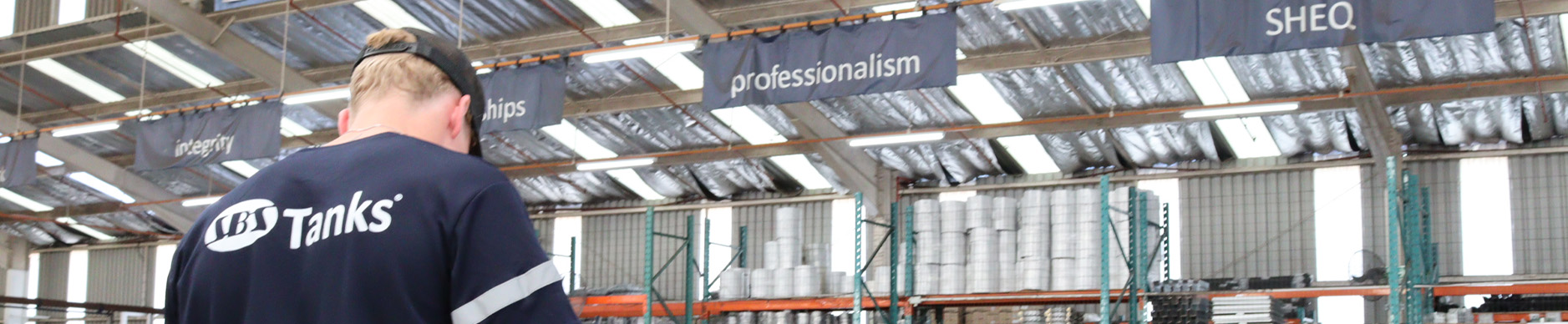

SBS coordinates modular tank manufacturing through pre-production engineering reviews, documented kick-off packs, departmental deadlines and ongoing progress meetings. Digital shop-floor information, qualified staff and ISO-managed processes help the factory identify issues before component orders reach final packing.
A tank enters our factory as a project with a specification, approved drawings, delivery commitments and dozens of manufacturing decisions that must align. By the time an operator starts rolling the first wall panel, considerable work has already happened behind the scenes.
At SBS Tanks, production planning is the critical link between an approved engineered sales order and the people who will manufacture it. The production system ensures the components are made for the correct tank, in the right sequence and in time to be brought together.
Our project managers first consolidate all the relevant information needed to release an order into manufacture: the client-approved General Arrangement (GA) drawing, engineering drawings for any bespoke components, technical specifications, project approvals and the required commercial clearances.
The project handover documentation then goes to our Production Planner, who is also a Process Engineer. Before scheduling the work, the planner reviews the drawings and submissions for completeness and prepares the manufacturing kick-off pack. It is an important checkpoint: a missing dimension or unapproved connection is far easier to resolve before any steel is cut than after a component has been partially or completely manufactured.
Every second day, new orders are introduced at production kick-off meetings. The team reviews rolling cards, manufacturing drawings, job cards, required quality-control checks, inspection hold points, data-book indexes and any special coatings or modifications. Each department leaves knowing precisely what is unusual about the job – and what they must deliver!
Once the job enters the production schedule, it receives a unique job number and a planned manufacturing sign-off (completion) date. The team works backwards from that date, allowing Rolling, Liner Manufacturing, Fabrication, Stores and finally Boxing & Kitting to establish their own deadlines and handover requirements while focussed on the deadline.
This matters because modular tanks are not produced on one continuous assembly line. Steel panels, liners and fabricated components are manufactured in parallel processes before being consolidated into a complete SBS Tanks order. All departments work in close cooperation to ensure their efforts, products and services tie in with each other to meet the “need by” date.
On the alternate days between new-order kick-offs, production process meetings focus on work already moving through the factory. Teams review progress against the schedule, material availability, outstanding approvals, potential delays, inspection hold points, non-destructive testing and client inspections where required. Actions are assigned, and project managers are kept informed through our real-time project management system.
At department level, toolbox talks and daily discussions address safety and immediate work priorities. Handovers between day and night shifts help carry forward the status of jobs, outstanding tasks and issues needing attention. This is how separate workshops stay connected to one manufacturing plan.
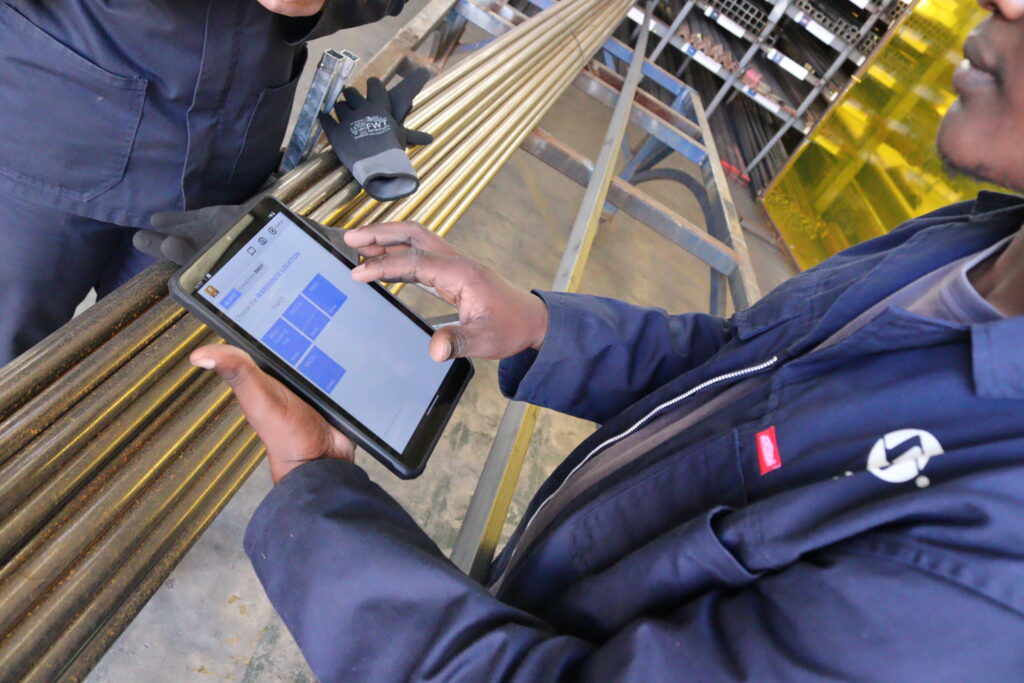
SBS uses Fusion Operations, a Manufacturing Execution System (MES), to convey and maintain production information with the factory floor. Operators use tablets to access relevant job information and record daily production activity, giving supervisors greater visibility of work in progress and a clearer basis for following up on potential delays or production bottlenecks.
Digital tracking does not replace the in-person production meeting or the experience levels of the team. It helps those conversations begin with better information: what has been done, what remains and where attention is required. Our separate project management processes keep customer-facing teams updated on the project’s progress until completed and signed off.
Even a carefully planned factory encounters changing priorities, equipment stoppages and material constraints. Our Production Manager uses Gemba walks – going to the place where work happens – to observe processes directly, engage operators and identify what is slowing the flow of production.
Supported by Lean Six Sigma qualifications, this approach emphasises standardised work, identifying bottlenecks, reducing waste and investigating root causes rather than only repeatedly treating symptoms. When demand or project timing requires it, production can be rebalanced or overtime scheduled within available capacity and safety requirements.
Our ISO 9001:2015 Quality Management System (QMS) provides the wider discipline: controlled information, defined responsibilities, verification points, records and corrective action where requirements are not met. ISO 45001:2018 reinforces the importance of safe, organised work as production demands change.
Because customers are not purchasing panels, liners, or roof trusses in isolation, they are purchasing one engineered tank order that must be complete, correct and ready for installation. Good production management reduces the risk of missing information, misaligned departments, avoidable rework and late surprises.
The SBS manufacturing advantage is the combination of pre-production engineering review, co-ordinated scheduling, digital visibility and experienced people who can recognise and resolve problems swiftly. No production system fully eliminates every delay, but a production system gives teams an increased chance of identifying issues early and responding before they may affect the project.
Project teams compile approved technical and commercial requirements, which a production planner reviews before the manufacturing kick-off.
Departments work back from a planned manufacturing sign-off date and coordinate materials and handovers.
Production process meetings, supervisory checks and a digital manufacturing system support visibility of work in progress.
It provides a framework for controlled documents, defined processes, records and corrective action in quality management.
© SBS Holdings 2026