Inside SBS: What a Steel Water Tank Factory Reveals About Manufacturing Capability
A water storage tank is usually judged after installation: its capacity, visible structure, connections and ability to perform its intended duty. But many of the decisions that make the installed tank possible take place long before it reaches the project site. They are made in a factory, where flat steel, liner fabric and fabricated components must become a coordinated set of parts.For engineers and project buyers assessing steel water tank manufacturers, the factory offers a useful perspective. It reveals what is made in-house, how manufacturing activities connect and how production information is translated into physical components. These questions matter especially when a modular tank must arrive on site with many separate items that fit together as intended.
What does manufacturing a modular tank involve?
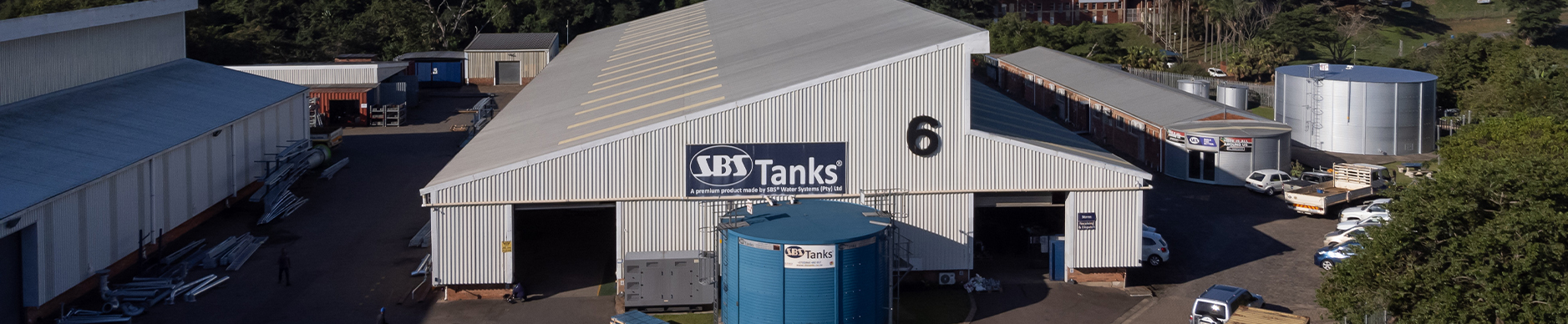
At SBS Tanks’ manufacturing facility in Pinetown, KwaZulu-Natal, the work extends beyond producing a cylindrical steel shell. Several departments manufacture or prepare different parts of an engineered tank order. Rolling shapes steel panels to the requirements of the applicable tank configuration. Liner Manufacturing prepares the internal liquid-containment liner. Fabrication produces structural assemblies and functional components. Stores, Boxing & Kitting then bring the relevant manufactured and supplied items together into a complete order ready for the next stage.These departments do not make interchangeable products. A rolled wall panel, a fabricated roof truss and a fitted liner each serve a different purpose. Yet the installation depends on their collective accuracy, identification and compatibility. That is why understanding the manufacturing sequence is useful to clients as well as factory personnel.
From flat steel to a curved tank wall
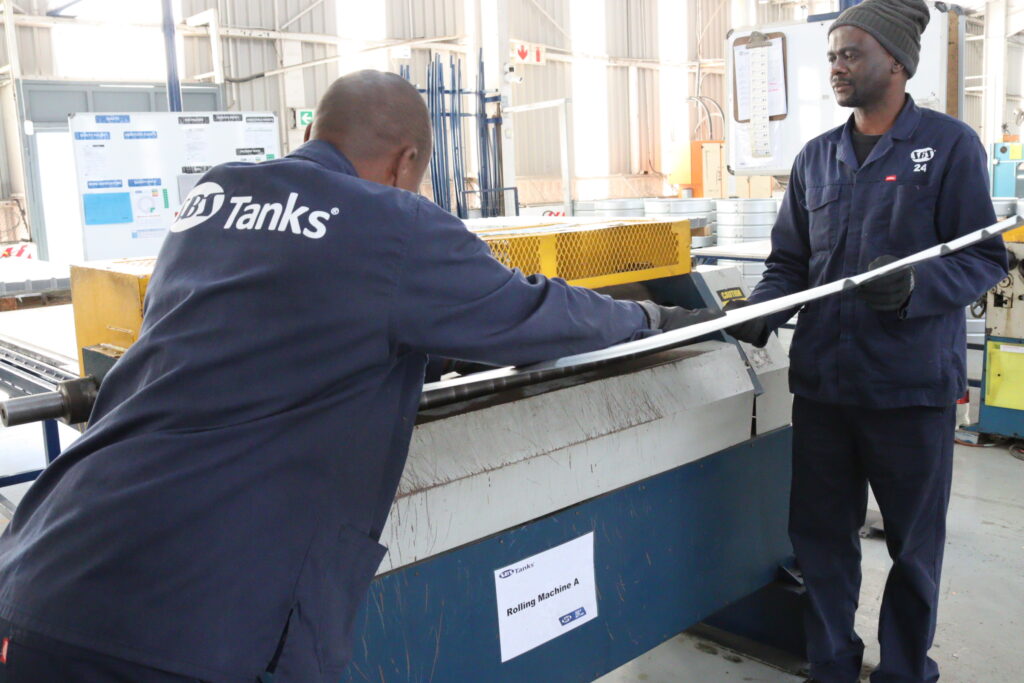
The Rolling department processes steel panels into the curved sections required for SBS tank walls. The required curvature relates to the tank model; operators verify it using the department’s checking equipment. Different tank configurations can require different steel thicknesses and panel arrangements, and reinforcement through lamination where specified.Completed panels are identified by their intended position or ring and prepared for transfer to the subsequent kitting process. It is a visually straightforward production stage, but it illustrates a wider principle: modular construction depends on consistency between individual parts that will only become a complete structure at installation.
Manufacturing the component that contains the water
Inside the tank, the liner provides the liquid-containment element. SBS’s Liner Manufacturing team works from the requirements of the tank and intended application, cutting and joining fabric sections to produce a liner matched to the designated configuration.Different stored liquids and project requirements can call for different liner specifications. The department maintains a protected working environment for handling liner materials, prepares associated protective geotextile where applicable and takes care when rolling and packing the finished liner. SBS uses sample-based welding and water-pressure checks on relevant incoming liner material batches; this should not be confused with a claim that every complete liner is filled and pressure-tested in the factory.The finished liner must ultimately be supported by the correctly manufactured tank structure and the associated project fittings.
Fabrication: structure and functionality
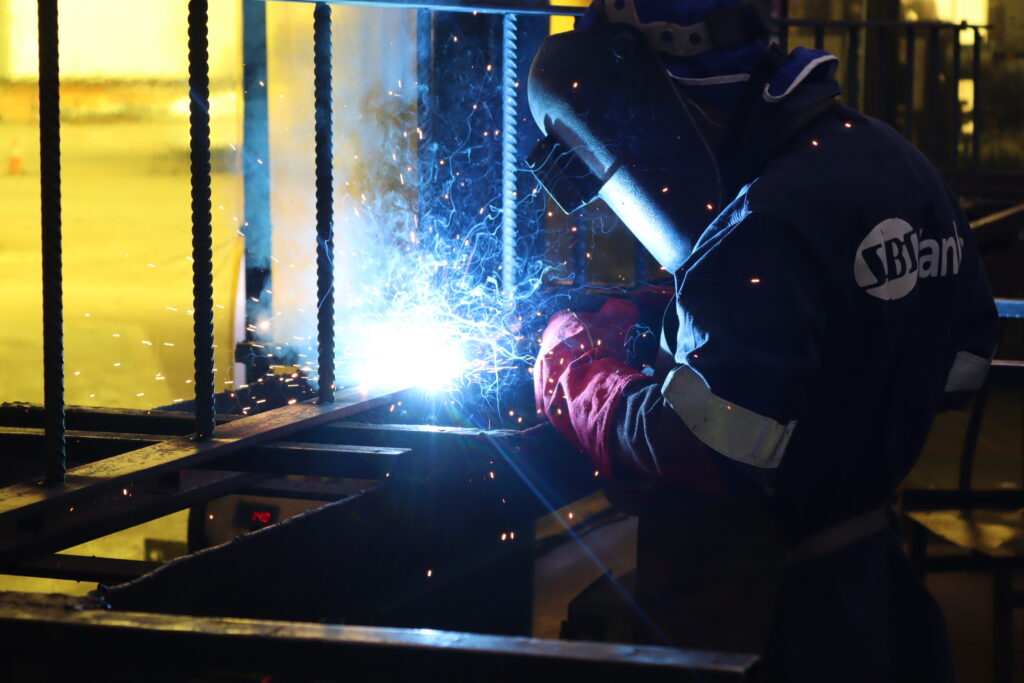
Fabrication turns specified steel sections and other material into components such as roof trusses, structural assemblies, pipe connections, nozzles, access equipment, vents and other project-required fittings. Standard, Cyclonic and Lite Tank ranges may call for different structural specifications, but the factory uses common underlying cutting, welding and preparation activities where appropriate.Some components require additional finishing, including galvanising as specified, before they are returned for order consolidation. Project-specific fabrication is important, but it should not obscure the main manufacturing proposition: SBS produces established engineered tank ranges with defined configurations and controls, rather than operating as a general-purpose custom metalwork shop.
Why Boxing & Kitting is part of the manufacturing story
A completed tank order is not a single finished object waiting on a loading bay. Rolled panels, the packed liner, fabricated parts and the necessary loose items must be correctly brought together. Boxing & Kitting works with job-specific information to assemble appropriate fittings and fasteners, complete boxes, identify their contents and check that the required components are present.The department also supports separate final checks of technical correctness and quantity completeness by different quality representatives. Those checks follow earlier checks undertaken in the manufacturing departments; they are not a substitute for making parts correctly in the first place. For the installation team, a logically identified, complete order reduces avoidable uncertainty when parts are unpacked on site.
What a buyer should look for in a factory visit
A factory visit can be more informative than a list of equipment or certifications. Ask how tank configurations are translated into the work undertaken by each department. Observe how completed items are identified and passed on. Ask which manufactured components correspond to the proposed project and how deviations or changed requirements are managed.SBS’s ISO 9001 and ISO 45001 management systems provide an organisational framework, but the more revealing evidence is how the people, production methods and order-specific information are applied in practice. Buyers should distinguish the existence of a documented system from evidence that it is being followed for their project.
Conclusion
A tank’s performance cannot be assessed solely by looking at a manufacturing photograph, but the factory reveals the expertise and coordination behind the product. Rolling, liner manufacture, fabrication and order consolidation each contribute something different; together, they turn an engineered tank configuration into components that can be assembled for use.For project teams considering a modular steel water tank, the most useful discussion is not merely who can supply the required volume. It is how the proposed tank will be manufactured, checked and prepared for installation. To discuss an SBS tank requirement or enquire about an appropriate factory visit, contact an SBS Engineer.
Frequently asked questions
Does SBS manufacture its own steel tank panels?
SBS manufactures rolled steel wall panels at its Pinetown facility as part of its tank production operations.
Are the liners manufactured separately from the steel tank panels?
Yes. Liner Manufacturing is a distinct operation that prepares liners according to the tank configuration and application.
Does one fabrication process apply to every tank?
The underlying fabrication activities are similar, but engineering requirements and component configurations vary among tank ranges and projects.
Does ISO certification mean each individual tank is independently certified?
No. ISO 9001 and ISO 45001 concern management systems; applicable product and project conformity requires its own evidence and verification.
Can customers visit the SBS factory?
A factory visit may be arranged subject to business requirements, safety procedures and approval. Enquire with the relevant SBS team.